
- Article
- April 14, 2026
An Expert on Modern Ventilation: Why Opening a Window Is No Longer Enough
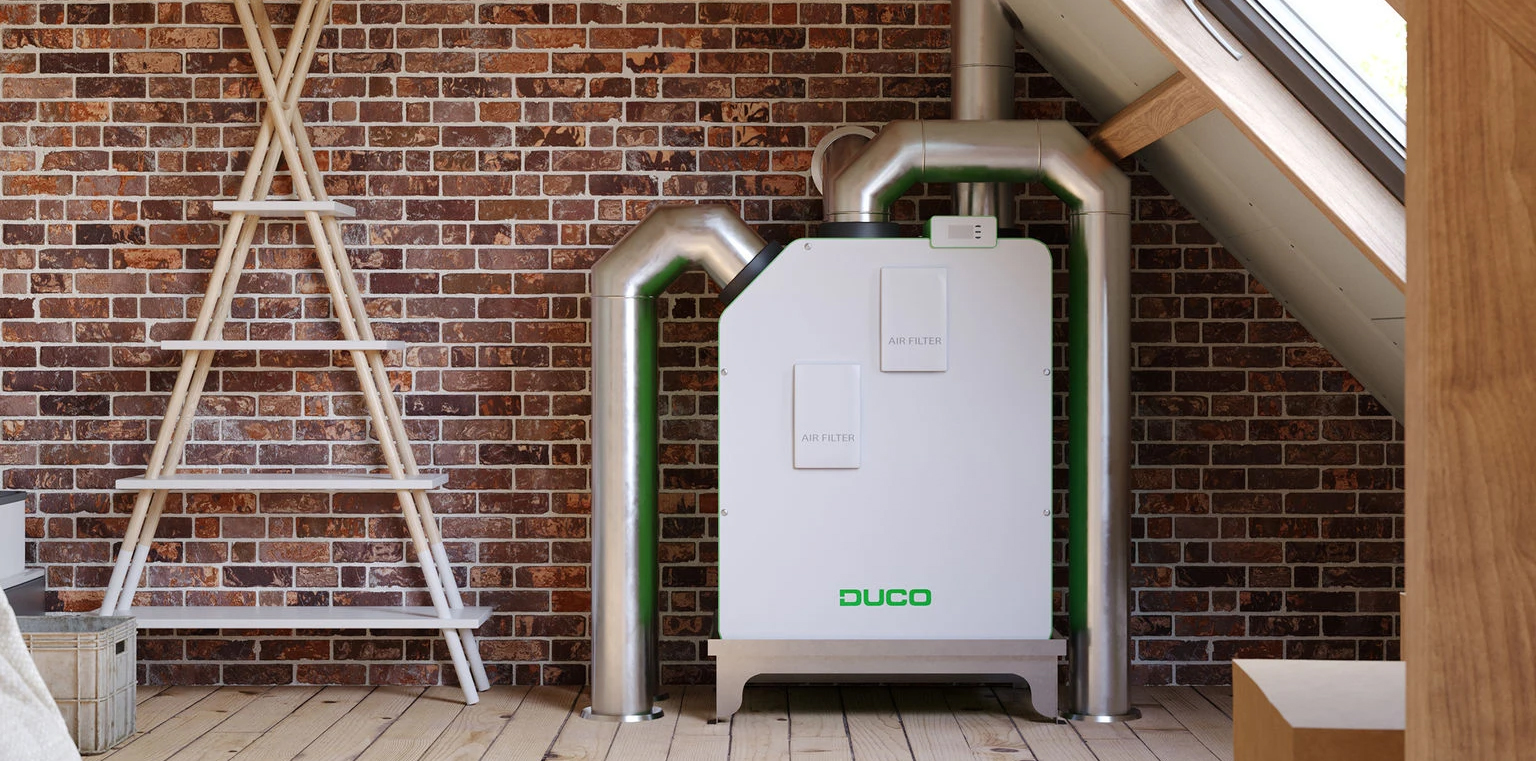
As modern homes become increasingly airtight and energy-efficient, greater attention must be paid to indoor air quality which is becoming an essential part of overall comfort. With limited natural air circulation, moisture, dust and carbon dioxide can accumulate indoors and the effects are quickly felt in everyday life through poorer sleep, fatigue, or more frequent allergic reactions.
This is precisely why more and more homeowners are choosing heat recovery ventilation systems which ensure a constant supply of fresh air without significant heat loss. According to Aurimas Esmantas, Brand Development Manager at “ACC Distribution”, this is no longer considered a luxury, but rather a standard: “People are increasingly realising that well-being at home begins with the air we breathe. Heat recovery ventilation makes it possible to enjoy a continuous flow of fresh, filtered air without any additional effort.”
An Open Window Is Not the Best Ventilation Solution
At first glance, opening a window may seem like the simplest and most natural way to improve indoor air quality. In reality, however, the situation is quite different. When a window is opened, not only fresh air enters the room, but also pollen, particulate matter, and urban pollution. What is more, settled dust is stirred up again.
“The problem is that ventilation through an open window is uncontrolled – we cannot regulate either what enters the indoor environment or how much air is actually exchanged. As a result, we often achieve the opposite of what we expect: we let in more pollutants, while the air itself does not always renew efficiently,” says A. Esmantas.
For this reason, an increasing number of residents are opting for heat recovery ventilation systems. A heat recovery unit operates quietly and almost imperceptibly, yet its impact on everyday life is evident: fresh air is supplied continuously, while indoor air is replaced without losing heat. This helps regulate humidity, dust, and unpleasant odours, while maintaining a healthier home environment.
Filters: One of the Most Important Components of a Heat Recovery Unit
A common scenario is that a heat recovery unit performs excellently at first, but over time its efficiency begins to decline. According to A. Esmantas, one of the main reasons is often very simple: neglected filters. These are the components that ensure clean air enters the rooms while protecting the unit itself from dirt and contaminants, meaning that even the most advanced system requires regular maintenance.
“Filters are one of the most important elements in the entire system. If they are not properly maintained, it is not only the efficiency of the unit that suffers, but also people’s health,” A. Esmantas emphasises.
Manufacturers recommend replacing filters every 3–6 months, but according to the expert, it is equally important to remove and vacuum them at least every couple of months. Particular attention should be paid in spring and autumn, when the level of dust and allergens in the environment increases. For more sensitive individuals, higher-grade filters are recommended, as they are more effective at capturing fine particles.
According to A. Esmantas, one of the most common mistakes is trying to save money by choosing cheaper, non-original filters. Although they may appear similar, their properties often do not meet the required standards, meaning the actual benefit is minimal. In such cases, dirt and moisture may begin to accumulate inside the heat recovery unit, and over time even mould may develop, potentially disrupting the operation of the entire system.
Not Just Clean Air, but Silence as Well
When it comes to heat recovery ventilation systems, increasing attention is being paid not only to technical parameters, but also to ensuring that the unit remains unobtrusive in the home. This is also a key focus for Belgian manufacturer “DUCO”.
“Today, comfort depends not only on air quality, but also on the level of noise a system produces and on how well it adapts to a person’s lifestyle,” says the Brand Development Manager.
According to him, in practice it is often noise that becomes the most noticeable issue in everyday life. At first it may seem insignificant, but over time even low-level background sound can become tiring – especially at night. Residents often encounter situations where sounds travel through the ductwork from other rooms or from outside, and sometimes the unit itself may generate too much noise.
This is why higher-end “DUCO” units feature additional sound insulation and specially designed casings that reduce noise both inside the unit and as it travels through the ducts. As a result, the system operates not only efficiently, but also quietly, remaining virtually unnoticeable in everyday living environments.
Ventilation Tailored to Everyday Living
Modern heat recovery units are increasingly becoming part of the smart home ecosystem, and this aspect has been developed in a particularly practical way in “DUCO” Premium solutions. These systems allow homes to be divided into separate zones, with ventilation controlled individually in each one. The system can ventilate only selected rooms, while reducing or temporarily stopping operation in others.
“Ventilation can be controlled via CO₂ sensors, which automatically increase airflow when more people are present indoors and air pollution levels rise accordingly, or through timers and pre-set scenarios. The system can also be integrated with smart home solutions – for example, by changing operating mode when residents leave or return home,” says A. Esmantas.
Aurimas Esmantas, ACC Distribution Brand Development Manager

Such solutions not only enable more precise control of air quality, but also reduce energy consumption, as air circulates only when it is genuinely needed. According to the expert, the use of CO₂ sensors and zonal control can reduce heating costs by as much as 30 per cent. Timer-based control also lowers energy consumption, although the effect is less pronounced.
Humidity Balance: An Important Part of Comfort
Another important aspect increasingly emphasised by “DUCO” is humidity balance. In the past, many heat recovery ventilation systems simply removed moisture from indoor spaces, which meant that during the colder months the air often became excessively dry. Newer solutions using enthalpy heat exchangers allow some of this moisture to be returned to the indoor environment, helping maintain a more comfortable indoor climate.
“In response to the needs of the Lithuanian market and at our request, “DUCO” plans to expand this technology even further. At present, enthalpy heat exchangers are installed only in more powerful units, but in the near future they will be integrated into all heat recovery models from this manufacturer,” notes A. Esmantas.
It is also important to note that as moisture continuously circulates inside a heat recovery unit, condensation can accumulate within the system, and together with dirt this can create a breeding ground for bacteria or mould. For this reason, more advanced “DUCO” units use heat exchangers coated with an antibacterial layer, helping maintain cleanliness and ensure longer-lasting efficiency.
“This is particularly relevant in our climate conditions, where the heating season is long and dry air can cause discomfort, affect well-being, or even have an impact on health,” says A. Esmantas.
Ultimately, it is precisely such solutions that demonstrate that modern heat recovery ventilation is no longer just about ventilation itself, but about comprehensive control of the home indoor climate – from air cleanliness to humidity balance.