
- Article
- October 12, 2026
After Severe Storms, Businesses Are Looking for Ways to Secure Uninterrupted Power Supply. Expert Warns: “Many Start Thinking About It Too Late”
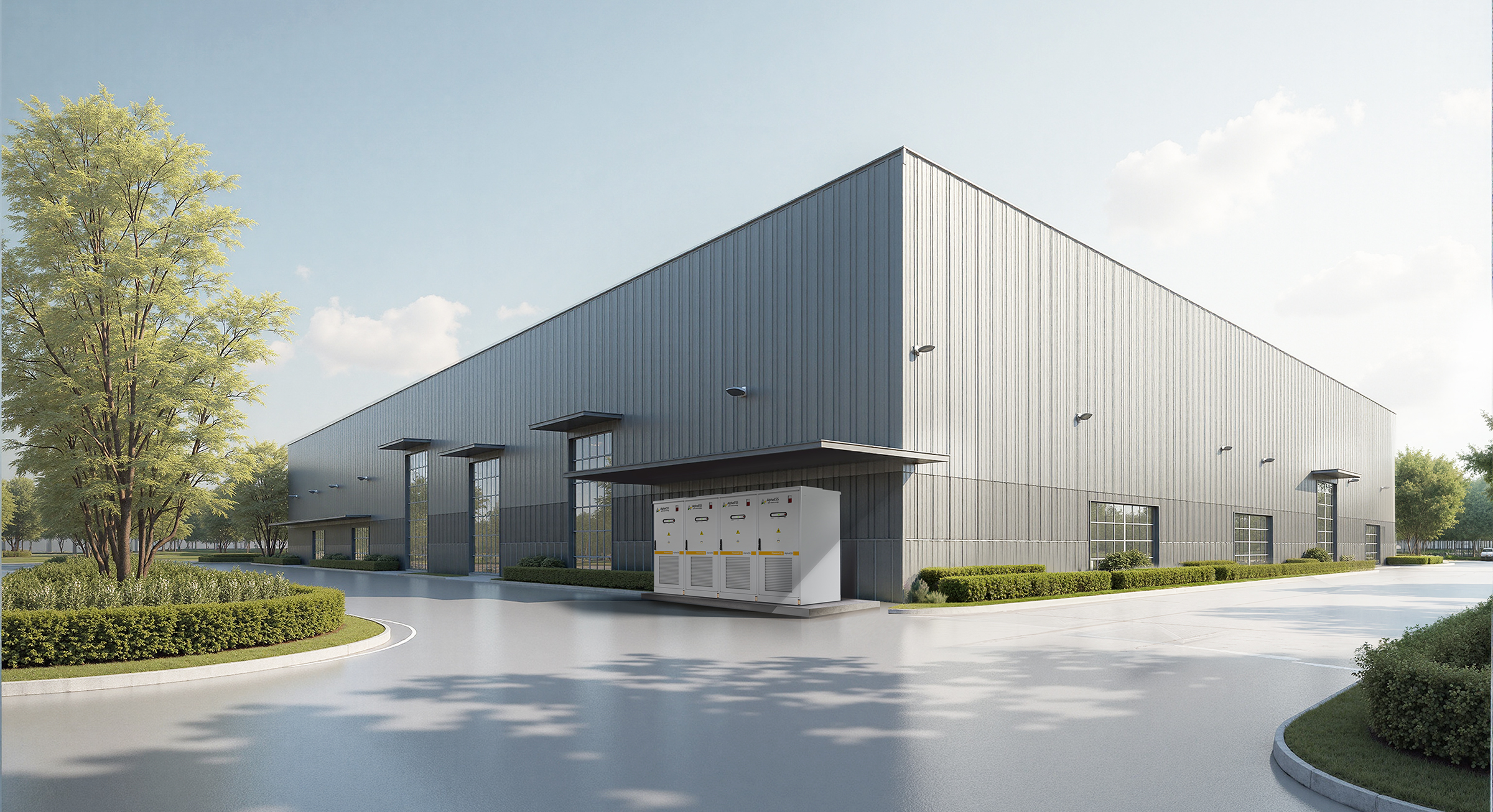
Lithuania’s energy sector is evolving at a remarkable pace. Solar and wind power generation can already cover a significant share of the country’s electricity demand. Yet this transition brings a new challenge for businesses: what happens when electricity is generated at a different time than it is needed, or when the power supply is disrupted altogether?
This is why energy storage systems are becoming an increasingly important part of the energy landscape alongside renewable generation. Large-scale battery parks can participate in electricity markets and help balance the grid, while for factories, warehouses and data centres, battery storage can serve as a critical tool for improving energy resilience.
The range of energy storage solutions available in Lithuania continues to expand. One of the manufacturers active in this market is AlphaESS, whose systems are used both in commercial energy storage applications and larger energy infrastructure projects. According to Martynas Pukinskas, Head of Green Energy Business Unit at ACC Distribution, companies should begin not with the technology itself, but with the specific challenge they are trying to solve.
“For manufacturing companies, a power outage can mean halted production and direct financial losses. More and more businesses are assessing not only the cost of electricity itself, but also the cost of being without it for several hours,” says Martynas Pukinskas.
Extreme weather conditions are making this issue increasingly difficult to ignore. However, according to the expert, many companies only begin seriously considering energy resilience after experiencing interruptions to their power supply firsthand.
For developers of battery storage projects, energy storage creates a different opportunity: electricity can be stored when supply is abundant and used or traded later when demand increases. Such facilities can also play an important role in maintaining grid stability and supporting system balancing.
Electricity Is Needed Even When the Sun Is Not Shining
Electricity generation and electricity demand do not always occur at the same time. This challenge affects both businesses seeking greater energy resilience and developers of large battery storage projects. As solar and wind generation continue to grow, periods of surplus production can be followed by times when renewable output is significantly lower. Storage systems help bridge this gap by capturing excess energy and making it available when it is needed most.
The trend is clearly reflected in data from the Lithuanian Energy Agency. In July 2026, wind and solar power plants together generated nearly 80% of the country’s electricity consumption. The increased renewable output also contributed to lower wholesale electricity prices, which averaged €75.63/MWh during the month and declined by 19% compared with the previous month. During the final week of July, the average price fell to just €38.08/MWh.
These market fluctuations create opportunities for battery storage operators to capture energy when conditions are favourable and use or sell it later when demand and value increase. For industrial businesses, the same principle can improve self-consumption of generated electricity while providing an additional backup resource in the event of a power outage.
This highlights one of the most important functions of battery storage: separating the moment electricity is generated from the moment it is consumed.
“When solar and wind generation is high, there may be more electricity available than is immediately needed. Energy storage systems allow that energy to be shifted in time, storing it when supply is abundant and using it later. In large-scale projects, this is no longer simply about backup power; it has become a standalone energy business model,” explains Martynas Pukinskas.
Martynas Pukinskas, Head of Green Energy Business Unit at ACC Distribution

For Businesses, Operational Continuity Comes First
Large battery parks represent only one part of the storage market. Another important segment includes battery systems deployed at factories, warehouses, service facilities, logistics centres, retail operations and IT infrastructure. While a power outage in an office may simply result in a few hours of remote work, the same interruption can bring production lines to a stop, create downtime and prevent customer orders from being fulfilled.
“The importance of uninterrupted power supply for business is beyond question. However, every company should clearly understand which processes cannot afford to stop, even for a few hours. That is where the assessment of any energy storage solution should begin,” says the ACC Distribution representative.
This is not relevant only to manufacturing facilities. If a data centre or critical server infrastructure loses power, an online store, for example, may become unavailable. In a factory, the most critical asset may be a production line; in another business, it could be refrigeration, communications equipment or another key system.
“A hotel lit by candlelight sounds romantic until you remember you’ve paid for the experience. For a business, it is no longer romance, it is an unhappy customer and potential reputational damage,” says Martynas Pukinskas.
That is why a battery storage system does not necessarily need to power an entire facility. By identifying critical processes, assessing their power requirements and defining how long they must operate independently, businesses can select a storage solution with the right capacity and performance.
Batteries Can Also Help When Grid Capacity Is Limited
Energy storage can deliver benefits beyond backup power. One less obvious but increasingly valuable application is power demand management.
If a company’s grid connection cannot support short-term peaks in electricity demand, a battery installed on site can provide the additional power required. This can be particularly useful when expanding production capacity or deploying high-power charging infrastructure for electric vehicles, heavy-duty transport or buses. In such cases, a battery becomes more than an energy storage asset; it becomes an integral part of the company’s energy infrastructure.
Another natural combination is a solar power plant paired with battery storage. Excess energy generated during the day can be stored and used whenever demand increases. This capability is also available through AlphaESS solutions.
“It is important to view battery storage not as a standalone box filled with batteries, but as part of a company’s broader energy ecosystem. Electricity consumption patterns, existing solar generation, grid connection capacity, critical operations and future development plans all need to be considered before determining the right solution,” notes Martynas Pukinskas.
Technical Specifications Are Not the Only Consideration
Energy storage systems for businesses and utility-scale projects are long-term investments. As a result, purchasing decisions should not be based solely on technical specifications or price. Future operational requirements and long-term support should also be taken into account.
“We are talking about systems designed to operate for 15 years or more. That does not mean the battery stops working after that period; rather, its capacity gradually decreases over time. This is why companies should think ahead during the design phase and consider how their energy needs may evolve in the future,” explains the expert.
AlphaESS technologies have been deployed in Lithuania for several years and were also used in Butrimonys, where the first commercial energy storage project in the Baltic States was implemented.
“When selecting a storage solution, the equipment itself is only part of the equation. We have a local team and technical engineers who can provide support before installation and throughout the system’s lifecycle. This becomes especially important in the event of a fault, where the objective is not only to identify the issue but to resolve it as quickly as possible and provide any necessary replacement components,” says Martynas Pukinskas.
From a long-term perspective, cybersecurity is another increasingly important consideration. Energy storage systems can be connected to the internet and managed remotely, while large-scale battery facilities are becoming an integral part of the wider power system.
“Companies should consider the implications if someone were able to remotely interfere with or disable an energy storage system, particularly in large-scale projects rather than individual units. That is why cybersecurity is also a key focus within AlphaESS solutions,” says the green energy expert.
From proper system selection and ongoing maintenance to cybersecurity, each of these elements contributes to stronger energy resilience. Yet according to Martynas Pukinskas, the first step remains understanding how vulnerable a business is to a prolonged loss of electricity.
“We have become accustomed to the idea that electricity will always be available. But energy resilience starts with preparation. A company does not need to become an energy company itself, but it should understand what would happen if power were unavailable for several hours and which parts of that risk it can manage on its own,” he concludes.